
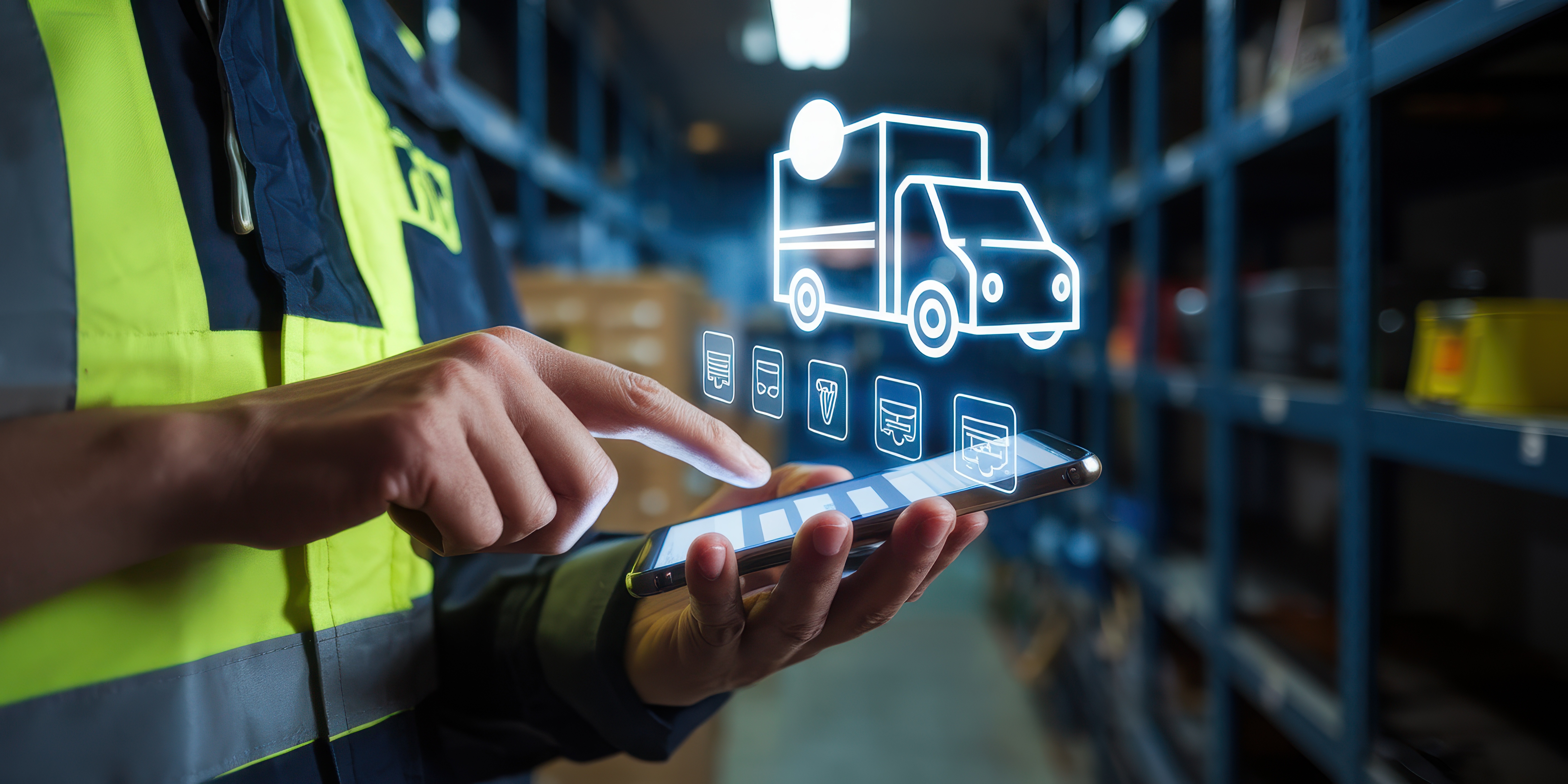
For many organisations, logistics transformation begins and ends with freight procurement. Rates are negotiated. Transporters are empanelled. Contracts are signed. At that point, transport is considered "a solved problem".
This assumption is one of the biggest reasons long-haul logistics continues to bleed cost.
Freight procurement addresses only the price of moving goods. It does not address how transport is planned, how capacity is utilised, how execution is monitored, or how outcomes are measured. In long-haul networks, where distances are large and variability is constant, these operational layers matter more than the negotiated rate itself.
Once a vendor is assigned, a series of decisions still follow. Which vehicle is allocated. How the route is planned. How loads are arranged. How execution is tracked. How delays are handled. How billing is validated. Most inefficiencies occur in these layers, not during procurement.
This is where a Transport Management System (TMS) becomes essential. Not as a procurement tool, but as an execution and control system for long-haul logistics.
It's commonplace to see your logistics teams on calls, 24/7. Their lives live on endless coordinating tasks between internal teams, transport partners and customers. The time they were supposed to spend improving the organisation was spent in coordination.
A Transport Management System governs the entire transport lifecycle, not just vendor selection. It starts when transport demand is created and ends only when execution is closed financially.
Orders enter the system. Loads are planned. Vehicles are allocated. Routes are optimised. Execution is monitored in real time. Exceptions are handled as they occur. Billing is validated against contracted terms. Payments are settled without manual intervention.
Each step feeds into the next. Planning informs execution. Execution data improves future planning. Financial outcomes close the loop. This continuous flow is what allows long-haul transport to scale without losing control.
Without a system, these steps exist but remain disconnected. With a Transport Management System, they become part of a single operational process.
In each of these steps a TMS automates, digitizes and optimizes your outcomes — unlocking productivity at an organisational level.
Once a vendor is assigned, efficiency depends on how routes and capacity are used. Long-haul networks often involve multiple stops, multiple lanes, and mixed cargo types. Poor route planning and inefficient space usage quickly erode margins.
A Transport Management System enables route planning across long-haul networks by considering delivery clusters, lane combinations, and stop sequencing. Multi-stop and multi-lane optimisation reduces unnecessary detours and overlapping routes.
Empty miles and underutilised trips are reduced through better consolidation and vehicle planning. These gains compound over distance. In long-haul logistics, small improvements per trip translate into significant savings at scale.
Most transport planning still operates in two dimensions. Weight and volume are checked. If limits are met, the load is approved. This approach ignores how goods are actually placed inside the vehicle.
Three dimensional space optimisation changes this entirely.
A modern Transport Management System plans loads based on how cargo fits within the vehicle, not just how much it weighs or occupies on paper. Items are arranged to maximise usable space while respecting stacking rules, fragility, and delivery order.
This approach allows more cargo to be moved per trip without compromising safety or service levels. It reduces the number of vehicles required. It lowers cost per shipment. It improves capacity utilisation across long-haul routes.
In large networks, three dimensional load planning becomes one of the most powerful levers for transport optimisation.
Execution is where most long-haul transport breaks down. Plans look good on paper but fall apart on the road. Manual follow-ups become the norm. Calls replace data. Spreadsheets replace systems.
A Transport Management System structures daily execution. Dispatch schedules are generated systematically. Trips are created and assigned with clear ownership. Status updates are automated based on execution milestones.
When deviations occur, they are flagged immediately. Exception handling moves away from phone calls and reactive firefighting toward structured resolution. Transport teams spend less time chasing updates and more time making decisions.
Execution becomes predictable, not because conditions are perfect, but because the system absorbs variability.
Visibility transforms execution. Real time vehicle data allows transport teams to see what is happening as it happens.
Live vehicle tracking provides location context. Predictive ETAs adjust dynamically as conditions change. Delay alerts and route deviations are surfaced early, not after service failures occur.
This visibility enables operational decision making in real time. Loads can be reassigned. Routes can be adjusted. Stakeholders can be informed proactively. In long-haul logistics, where distances amplify uncertainty, this capability is critical.
Without real time data, execution remains reactive. With it, transport becomes manageable at scale.
Trust is a recurring challenge in long-haul logistics. Proof of pickup and delivery often relies on manual confirmation. Disputes are common. Audits are time consuming.
Geo tagging introduces objective verification into transport execution. Pickup and delivery points are location verified. Proof of delivery is captured with location context. Execution data is tied to actual coordinates, not verbal confirmation.
This reduces disputes and false reporting. It improves compliance. It strengthens audit readiness. Geo tagging turns execution data into a reliable record rather than a contested narrative.
For long-haul networks with multiple stakeholders, this level of control is essential.
Billing is often the most neglected part of transport operations. Manual invoices are compared against contracts. Discrepancies are common. Settlements are delayed. Leakage goes unnoticed.
A Transport Management System automates freight billing by validating charges against agreed terms. Rates are checked at the lane and vehicle level. Exceptions are flagged immediately.
Transporter settlements are faster and more accurate. Manual reconciliation errors are eliminated. Financial closure becomes part of the transport process rather than a separate, delayed activity.
Transporters factor in the speed of payments into the negotiated costs. This starts feeding in as a virtuous cycle, where the transporter and the organisation grow together.
In long-haul logistics, where volumes and costs are high, this control directly impacts profitability.
Long-haul transport exposes the limits of procurement led thinking. Negotiated rates provide visibility into cost, but not control over outcomes.
Procurement focuses on who moves the freight. Orchestration focuses on how freight is moved. Cost visibility shows what is spent. Cost control determines why it is spent.
Long-haul logistics involves complexity that cannot be managed through negotiation alone. Routes change. Capacity fluctuates. Execution varies daily. Without a system, these variables overwhelm manual processes.
A Transport Management System provides the structure required to manage this complexity consistently.
Transport is no longer just a commercial activity. It is an operational discipline that directly affects cost, service levels, and resilience.
Organisations that treat transport as a system, rather than a series of transactions, gain a structural advantage. Long-haul logistics becomes predictable. Margins stabilise. Growth becomes manageable.
A Transport Management System makes this possible. It turns transport from a fragmented process into a controlled operation. Beyond procurement, it becomes the backbone of long-haul logistics at scale.
It's a common adage that speed and cost are brothers who grow together. In today's age — speed is a necessity and cost control is oxygen. A TMS enables you to reach your customers faster, more frequently in a very smart easy way. Best thing — reach at the same cost or lower!
This enables success in the market. Not having this speed will control costs at the expense of market share.
So who are you? First Mover or Fast Mover? Fast and steady wins the race.

MD, Co-Founder | Stackbox


