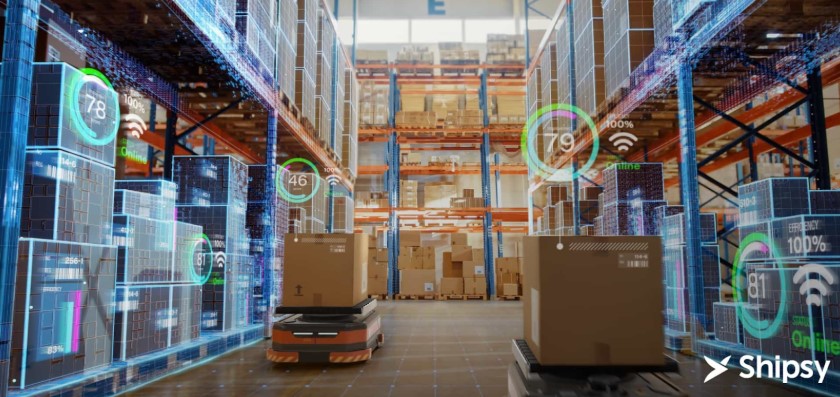
Built to outperform legacy WMS in high-SKU, high-load, high-velocity environments.
Executive Summary
In a world increasingly shaped by the dynamics of E- Commerce, omni channel fulfillment and automation, warehouse management systems must evolve from static inventory trackers to intelligent, adaptive systems. StackBox WMS is an AI-native, cloud-first platform built to power the next generation of fulfillment operations — seamlessly integrating people, automation, and intelligence to drive operational excellence. This white paper details StackBox WMS feature suite, architecture, industry impact, and future-ready capabilities, validated by proven deployments across global brands.
A. Introduction: The Modern Fulfillment Challenge
Warehouses today are under pressure to support:
High SKU proliferation
Real-time order fulfillment
Dynamic inventory visibility
Integration with robots, automation and external platforms
Legacy WMS solutions fall short in handling high-speed, high-scale, AI-augmented operations. Stackbox WMS was built to solve these modern needs by combining data science, automation control and process intelligence into one unified system.
Designed for high-load, high-SKU, automation-driven environments
I. Impact & ROI: Proven Performance
Benchmarked Benefits from Implementations:
Inventory accuracy improved to 99.9%+
Order picking accuracy > 99.5%
Warehouse throughput improvement: 15–30%
Cycle time reduction up to 40%
Reduced stockouts and improved space utilization
Case Study: P&G India Distribution Center
Inventory Accuracy: 99.95%
Stock Reconciliation Time Reduced by 80%
Full WMS-led automation for 100,000+ pallet spaces
J. Conclusion: The Future of Warehousing is AI-Native
StackBox WMS delivers on the promise of intelligent, automated, and flexible fulfillment. With its deep integration of AI agents, automation orchestration and a user-friendly SaaS backbone, it is redefining how enterprises manage their intralogistics and warehouse operations.
StackBox is not just a WMS. It is a Fulfillment Operating System for the modern supply chain.
We use cookies and similar technologies to help personalise content, tailor and measure ads, and provide a better experience. By clicking OK or turning an option on in Cookie Preferences, you agree to this, as outlined in our cookie Policy.
Cookies are small text that can be used by websites to make the user experience more efficient. The law states that we may store cookies on your device if they are strictly necessaryfor the operation of this site. For all other types of cookies, we need your permission. This site uses various types of cookies. Some cookies are placed by third party services that appear on our pages.
Thank you! Your submission has been received!
Oops! Something went wrong while submitting the form.