
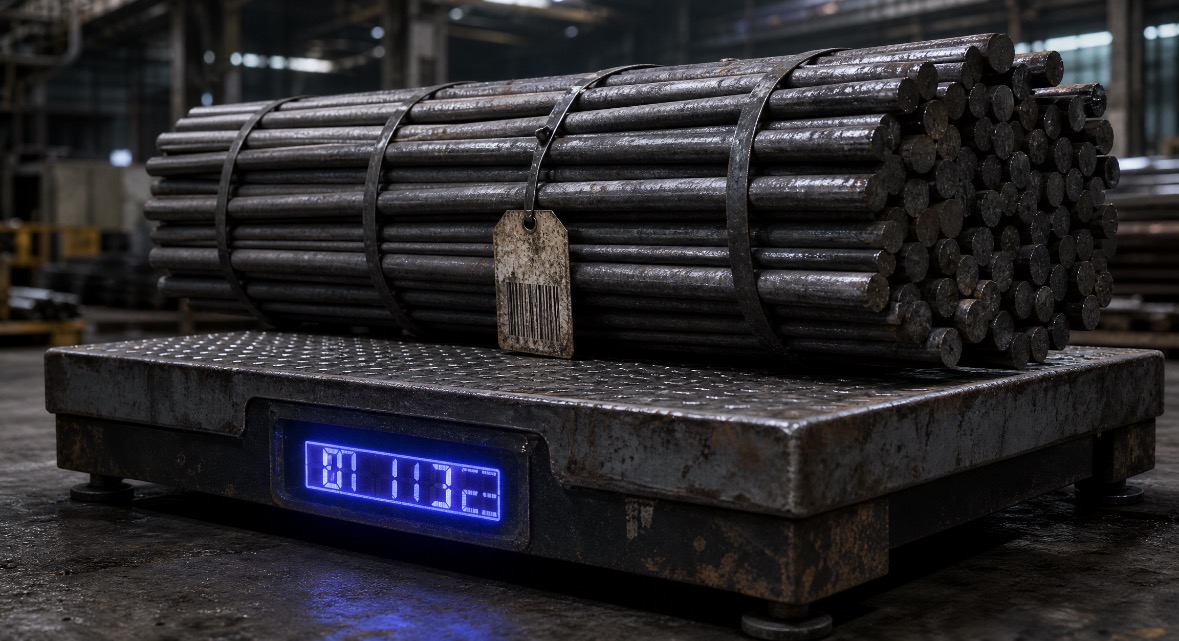
Building materials warehousing has distinct requirements worth testing explicitly in any WMS evaluation: count-and-weight (catch-weight) handling, outdoor and non-standard storage locations, equipment and access constraints, and staged project releases. Products are heavy, often irregular, frequently sold by weight rather than unit, and often stored in yards rather than racking. Order profiles range from small retail supplies to large project deliveries with multiple staged releases. A standard WMS applied to this environment without adaptation creates gaps in inventory accuracy, pick efficiency, and project order management.
This is an informational guide to how building materials warehouses operate and what a WMS needs to handle them effectively.
Many building materials have variable weight within the same product category. Structural steel cut to length varies by the cut. Concrete products have natural weight variation. Aggregate and stone are sold by weight, not unit.
Catch-weight inventory management in this context means tracking both the handling unit (the piece, bundle, or container) and the actual variable weight recorded at receiving. This is different from weight-only tracking: the system must know how many handling units are in a location and what each one weighs, because both the unit count and the weight matter for fulfilment, dispatch, and billing.
Catch-weight tracking applies where both the handling unit count and the actual weight matter. Material sold purely by bulk weight is a different case that may not need unit-level tracking. Where both dimensions matter and only one is captured, the result can be inaccurate inventory values or manual weight reconciliation at dispatch.
Note: Confirm with Stackbox whether the required catch-weight workflow is supported in the proposed scope.
Standard warehouse racking assumes relatively uniform product dimensions. Building materials frequently do not conform: long steel sections that require horizontal floor storage, irregular masonry, bundled timber, rolls of insulation, bulk aggregate. These products need outdoor storage, open bays, or dedicated floor areas, and the WMS location structure must accommodate non-standard storage types with the same inventory rigour as standard racking.
A significant portion of building materials inventory lives in yards: structural elements, landscaping materials, roofing sheets, prefabricated components. Managing yard locations accurately, tracking what is where within yard areas, requires the WMS to extend its location structure outdoors.
Vehicle yard management (YMS), which governs inbound and outbound vehicle movements, bay scheduling, and queuing, is a related but distinct capability. Not all platforms that include outdoor stock locations include a full YMS. These are separate scope items in any WMS evaluation.
Building materials orders are frequently project-based. A construction project requires a specific list of materials across multiple deliveries tied to construction milestones: foundations, structure, fit-out. Unlike FMCG or retail orders where each order is independent, a project order may have 50 or more line items delivered in stages over weeks or months. This needs to be managed as a structured project order: cumulative delivery tracked, staged release managed by milestone, and alerts raised when a stage delivery is approaching. Which system owns the milestone schedule and authorises each release varies by operation.
Note: Confirm which system owns project milestones, release authorisation and delivery tracking, and validate the required Stackbox integration scope.
Building materials from different production batches may have quality variations that affect structural or aesthetic use, concrete strength grades, stone colour variation, steel specification tolerances. Goods receipt typically includes quality inspection and sometimes testing before materials are released to stock. The WMS must support inspection workflows at receiving, quarantine of failed or marginal materials pending test results, and batch-level quality documentation for materials requiring certification.
For materials sold by weight, the WMS maintains inventory in both handling unit and weight dimensions. Receipts record the number of units and the actual weight of each. Orders are allocated by weight quantity. Pick instructions specify the weight to fulfil, which may require cutting or measuring at pick time. Dispatch confirmation captures actual weight dispatched. The inventory record updates by both count and weight, ensuring that billing, freight calculation, and stock valuation all use actual data.
The WMS location structure must include location types for outdoor bays, open areas, crane-accessible zones, and drive-through lanes alongside standard racking. Attributes such as weight capacity, vehicle access type, and weather exposure status allow the WMS to assign materials to appropriate locations automatically rather than requiring manual location selection.
One design is to structure project orders in the WMS as parent orders with multiple delivery lines, each with its own scheduled date and site, with allocation managed against the project total. In other designs, the ERP or project management software owns the milestone schedule and sends an authorised release to the WMS. Releasing a stage should depend on that authorisation, not on a date alone. Cumulative delivery is tracked at project level. Partial fulfilment is recorded against each milestone rather than against the order as a whole.
For materials that require production batch documentation, concrete mix design certificates, steel mill certificates, stone quarry records, the WMS maintains lot and batch records from receiving through dispatch. Dispatch documentation for certified materials includes the batch reference automatically, eliminating manual certificate management at the dispatch desk.
Building materials businesses typically integrate WMS with ERP for order management and project billing, TMS for multi-vehicle project deliveries, and quality management systems for batch certificates and inspection records. The project billing integration is particularly important: building materials contracts are often billed by delivery milestone, and the WMS delivery records drive the billing trigger.
A WMS evaluated for building materials should be tested in three areas: catch-weight inventory (confirm it captures both unit count and actual variable weight per handling unit, not unit count alone), yard and outdoor storage (confirm it supports outdoor and non-standard storage locations, not only enclosed racking), and project-based order structures (confirm it can manage a project order with staged releases rather than treating each order independently). A WMS with configurable location types, catch-weight tracking across both unit and weight, and project order management can handle building materials without a separate specialist system.
Catch-weight WMS records inventory in both handling unit count and actual weight per location. Receipts record the number of units and the actual weight of each. Orders are allocated by weight quantity. Pick instructions specify the weight to fulfil. Dispatch confirms actual weight dispatched. The inventory record is updated by both dimensions, ensuring billing, freight, and stock valuation all use actual rather than assumed standard weights.
Outdoor stock locations extend the WMS's inventory location structure to cover yards, open bays, and external storage areas. Vehicle yard management (YMS) governs the movement of vehicles: inbound and outbound scheduling, bay assignment, queuing, and turnaround management. Both may be relevant for building materials operations, but they are distinct capabilities. An operation may need outdoor stock locations, a YMS, or both, depending on the operational model.
Project orders in the WMS are structured as parent orders with multiple delivery lines tied to milestones. The WMS tracks allocation against the project total, manages partial fulfilment by milestone, and triggers release of materials when a milestone date is reached. Cumulative delivery progress is visible at the project level throughout the lifecycle.
To discuss Stackbox WMS for building materials operations including catch-weight, outdoor storage, and project fulfilment, request a scoped conversation at stackbox.xyz.


