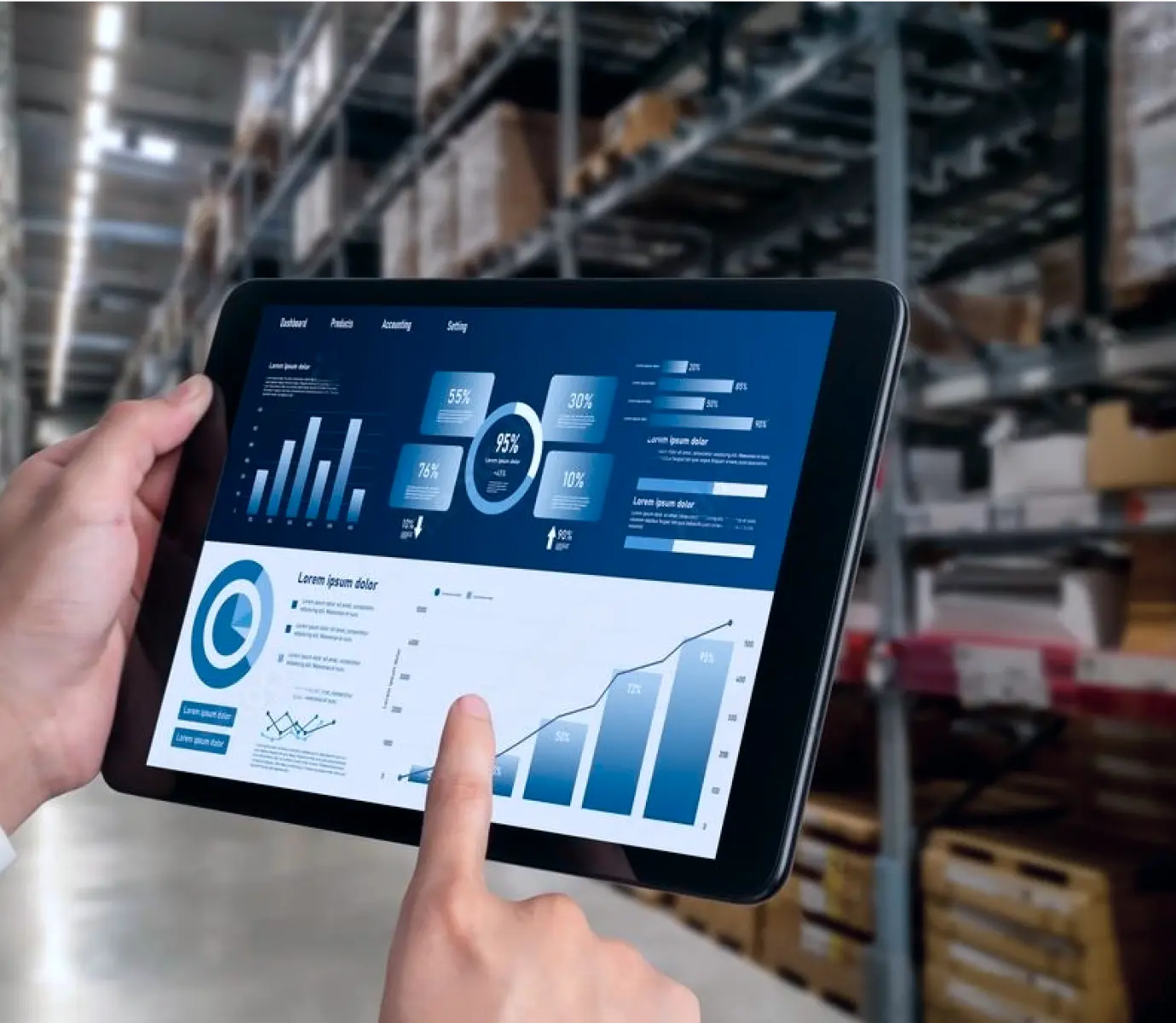
Warehouse Management Systems (WMS) play a crucial role in optimizing supply chain operations. Traditional and legacy WMS solutions often struggle to meet the dynamic demands of modern businesses, particularly those operating in omnichannel with varying order profiles, high velocity and high-volume environments. StackBox (SBX) WMS is designed to address these challenges by leveraging intelligent algorithms, easy-to-use UX and autonomous optimization. This report provides a comparative analysis of StackBox WMS vs Legacy WMS and outlines how we differentiate in creating incremental value for our customers.
A. Challenges with Legacy WMS Solutions
Legacy WMS solutions, built primarily for pallet and case handling, use transactional approaches and heuristics-driven methodologies.
A.1.Lack of Intelligence and Automation
Heavy reliance on operator decision-making, leading to inefficiencies and errors.
A.2.Poor User Experience and Adoption Challenges
Complex interfaces requiring extensive training- limiting adoption for new age blue collar workforce.
A.3.Inadequate Inventory Control
Many legacy systems experience - Ghost Inventory leading to fill rate drop.
Negative inventory situations leading to inventory integrity issues.
Operations stoppage during inventory counting activities leading to productivity drop.
A.4. Limited Multi-UOM Handling
Legacy WMS is designed for bulk handling and is inefficient in handling multiple units of measure (UOM), creating bottlenecks in omnichannel fulfillment.
A.5. High Cost of Deployment and Maintenance
Significant infrastructure requirement, high setup and maintenance costs - increasing total cost of ownership (TCO).
A.6.Limited Scalability and Customization
Expensive and time - consuming customizations, restricting adaptability to changing business needs.
A.7.Lack of Integrated Platforms
Absence of built-in Warehouse Control Systems (WCS), Yard Management Systems (YMS), and analytics capabilities, leading to fragmented operations.
B. How StackBox WMS Addresses These Challenges
StackBox WMS is designed for modern warehouses and modern workforce, incorporating advanced automation, intuitive UX, cloud-native infrastructure and intelligent workflows. Key differentiators include:
B.1.Autonomous and Intelligent System
System-driven allocation eliminating human decision-making errors and inefficiencies.
Dynamic task prioritization and interleaving to optimize workforce utilization.
B.2.User-Centric UI/UX for Quick Adoption
Intuitive and user-friendly interface designed for millennial and Gen-Z warehouse workers.
Multi-level approval workflows for enhanced operational accountability (for ex: Quality Status Conversion should follow proper Approval framework)
Advanced handling unit (HU) formation protocols ensuring proper segregation and storage integrity
Sophisticated slotting strategies to ensure co-storage compliance and reduce product damage risks
Complete traceability maintenance across all warehouse operations
D. Business Value Delivered by StackBox WMS.
D.1.Higher Productivity & Efficiency
Enhanced throughput through automated workflows
Optimized resource utilization
D.2. Reduced Operational Costs
Lower infrastructure costs through cloud deployment
Minimized workforce costs through simplified and automated process flows
D.3. Improved Accuracy and Compliance
>99.8% inventory accuracy
Audit trails ensuring end-to-end traceability
D.4. Scalability for growing businesses
Rapid and easy scalability
Flexible configuration for smooth transitions during expansions
D.5. Seamless Integration & Unified Commerce
Unified commerce enablement across multiple channels
Comprehensive platform integration (WCS, YMS, TMS and Analytics)
Conclusion
StackBox WMS represents a next-generation solution that overcomes the limitations of legacy systems through intelligent automation, cloud-native architecture and comprehensive integration capabilities. Its modern approach delivers operational excellence while ensuring scalability and cost-effectiveness for evolving supply chain needs.
With its advanced features, cloud-native, AI-driven, omnichannel-ready architecture and proven business value, StackBox WMS stands as the ideal choice for organizations seeking to optimize their warehouse operations in today's dynamic business environment.
We use cookies and similar technologies to help personalise content, tailor and measure ads, and provide a better experience. By clicking OK or turning an option on in Cookie Preferences, you agree to this, as outlined in our cookie Policy.
Cookies are small text that can be used by websites to make the user experience more efficient. The law states that we may store cookies on your device if they are strictly necessaryfor the operation of this site. For all other types of cookies, we need your permission. This site uses various types of cookies. Some cookies are placed by third party services that appear on our pages.
Thank you! Your submission has been received!
Oops! Something went wrong while submitting the form.